Soukeyna is a community educator and former founding CEO of Black Muslim Forum. Her work has included spearheading anti-racist work for a nationwide charity, and helping to develop the Black consciousness in North London and beyond. She is interested in Black and Muslim identity, Black collective healing and the teachings of Amílcar Cabral, Malcolm X and Kwame Ture.
In 2014, I was 19 years old and on a gap year before starting university. Online I had come across Black donors giving blood to Black patients who were struggling with sickle cell disease and was inspired to do the same.
When deciding to give blood, I didn’t know much about the process and was a little nervous however I was eager to help the Black cause in any way I could- I had been raised with an Afrocentric identity, a deep love for the Black community and ongoing worry for members of the community who were unwell and fighting sickle cell.
Sickle cell patients depend on blood that is ethnically matched and Black people giving blood to Black patients produces the best results. Rare blood subtypes such as Ro are often found in Black blood where demand is increasing by 10-15% each year. Despite this demand, only 2% of regular donors possess the subtype which is crucial to treating sickle cell.
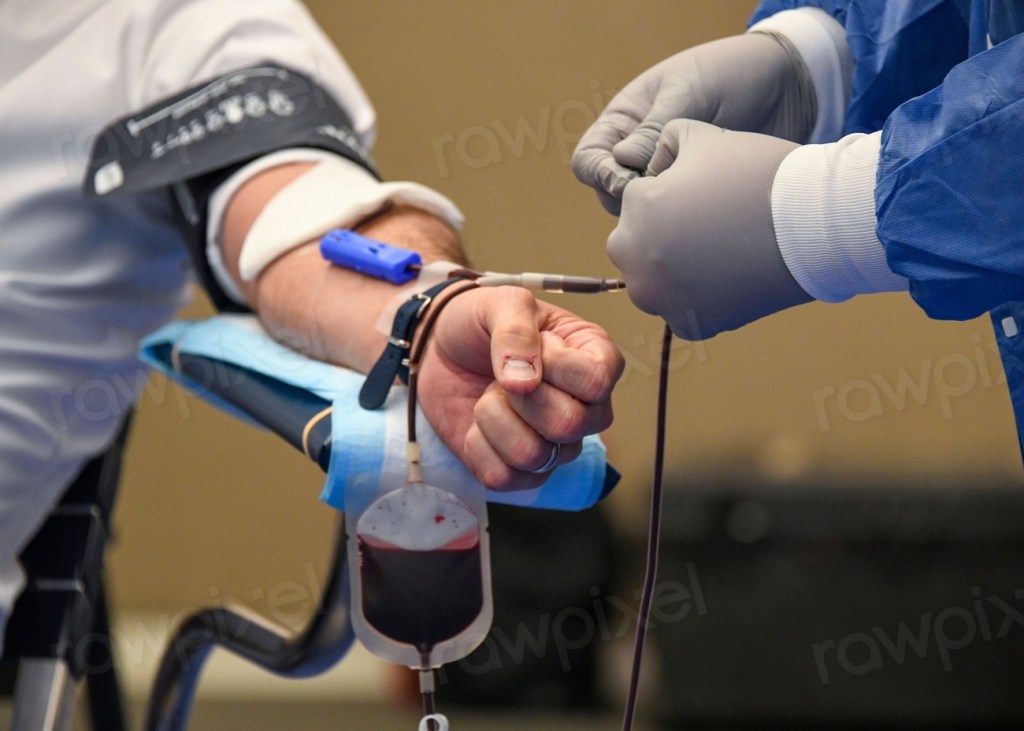
My appointment was booked in central London and the process was quick and painless. Upon entry the process was explained and I was taken through a few brief medical checks. After this I was led to have my blood drawn and before I knew it I was sitting in the recovery area where snacks were provided to ensure donors’ energy levels returned before leaving the facility.
Giving Blood is a perfectly safe process where you are monitored by medical professionals throughout. There is litte risk and by doing so you are saving lives. Common fears around giving blood are that you will make yourself sick by doing so or that it is an excruciating process. In actuality giving blood is painless and while momentarily depleting energy does not largely produce any complications.
According to statistics by NHS Blood and Transplants, sickle cell patients need 100 donors an average a year to maintain regular transfusions and save their lives. The pain from sickle cell can be debilitating and regular transfusions from the Black community can help patients live normal lives.
An appeal
After my gap year I started university and deepened my knowledge of African political thinkers, decolonisation and Black resistance movements throughout the 20th C and prior. This inspired me in my own small way to dedicate myself to anti-racist work, running a Black non-profit in London where we ran a Black supplementary school for young Black children, a Black girls mentoring programme, various events and programmes throughout the years as well as conducting groundbreaking research. Through this work whilst trying to uplift, educate and inspire the community, I also encountered a strong sense of apathy and a collective sense of disempowerment amongst some members. I was confronted with statements such as ‘what’s the point’, ‘nothing will change’, ‘It’s too far gone’, ‘there’s nothing we as Black people can do’.
Respectfully, I beg to differ and believe there is everything we can do. Yes, what has historically happened has caused seismic devastation across Africa and diasporic communities who reside in the metropole. Yes, politically and structurally, anti-racist resistance is not easy and is met with the mechanisms of racist systems that may take beyond our lifetimes to dismantle, however what you can do and what healthy Black people can do is save another Black life.
There is so much focus on what we are unable to do as a community and the cyclical sabotage Black people have been made to endure. And it is true that health inequalities in childbirth alone amongst Black women compared to their white counterparts are startling to say the least. But how can we play our part and resist in our small way? Ultimately, massive change can come to the life of our brothers and sisters with sickle cell and to our community if more of us collectively decide to give blood. Doing what we can in our own small capacities can trigger enormous change for ourselves, our loved ones and eventually the wider community.
Being a Black donor is a rewarding experience. You are using your own body to help someone to stay alive and in doing so helping to build the Black fraternity, contributing to Black society and dedicating yourself to a selfless act of kindness. There are no losses in choosing to give blood.
Beyond this, other ways we can give include plasma donations, bone marrow and stem cell donations and organ donations. Being of mixed North and West African heritage I know that finding bone marrow donations to match the mixed heritage patients who need bone marrow transplants to survive can be extremely difficult as half-matched donations can often be rejected by the patient’s body. Whether you are Black or come from mixed/ complex heritage, whatever you choose to give can be life changing for someone who needs your donations to survive. Malcolm X once said ‘The future belongs to those who prepare for it today’. I imagine the Black future to be one where building community goes beyond race equality and where the culture of mutual aid and the spirit of community organising pervasively extends to health equality and medical care.
If you want to create waves of change in at least one person’s life, sign up to give Blood here and make the world a little better.
 Soukeyna O.